
Just Because You Can Doesn’t Mean You Should
.webp)
Hi! I'm Stella
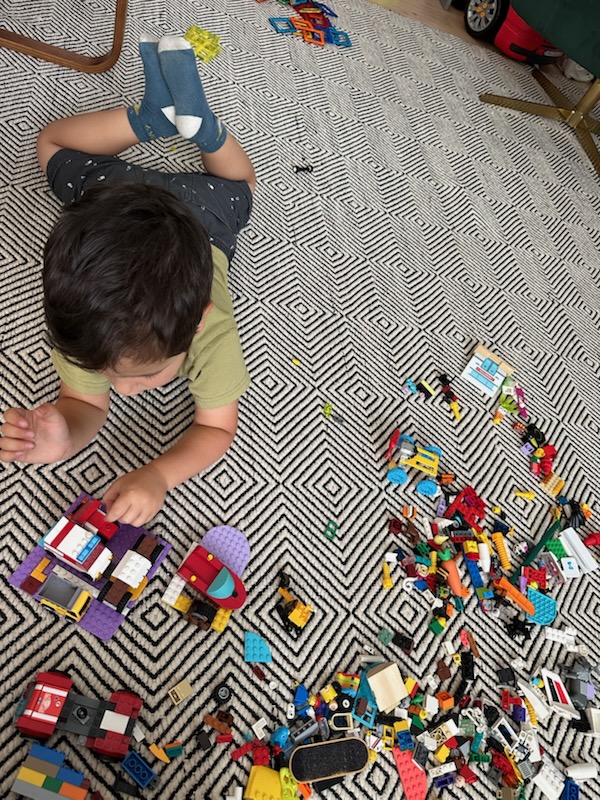
It was 8 p.m. and the floor was covered in Legos, dinosuars, and wrapping paper.
My son, Lev, just celebrated his birthday, and the living room looked exactly the way you’d expect after a joyful day of new toys and excited hands.
My husband was ready to rescue me and sweep him off to bed.
Part of me really wanted that. "I’ll clean up. It'll be faster, easier, and most importantly...quieter this way," I thought to myself.
But instead, I gently said, “Lev, it’s time to clean up.”
It’s a small moment, but it reminds me of a lesson I’ve learned the hard way. It's one many of the empathetic, capable leaders I coach struggle with: just because you can do something doesn’t mean you should.
The hidden trap of overfunctioning
In psychology and family systems theory, there’s a concept called overfunctioning. It happens when one person takes on more responsibility than is theirs, often out of care, efficiency, or a desire to keep things running smoothly.
It shows up everywhere in leadership. A senior leader sees a team member overwhelmed and notices a task that would take five minutes. So they jump in and do it. It feels helpful in the moment. Efficient, even.
But in fact, it runs counter to your desire for effectiveness: Energy is spent sorting through the inner conflict of should I or shoudn't I? Your work goes on pause. When you finally return to your own job, momentum is gone. You lost track of where you were. You no longer have the mental reserves for big picture thinking or planning. Multiply that pattern across a week or a year, and the cost becomes significant.
Research from Harvard Business School shows that leaders who spend more time on strategy, talent development, and culture lead higher-performing organizations. When leaders stay pulled into operational details, they limit the very impact their role is meant to create.
Overfunctioning doesn’t just drain your energy, it also quietly limits other people’s growth.
The real work of leadership
Cleaning up Lev’s toys would have taken me five minutes. But it would cost something else. It would drain the small pocket of energy I still had left at the end of the day to take care of my needs. And more importantly, it would take away Lev’s chance to take responsibility for his own things.
Leadership works the same way. When leaders step in too quickly, answering every question or finishing tasks for their teams, they may feel helpful. But they are actually short-circuiting capability building.
The real job of leadership is not to do more. It is to develop more capacity in others.
A question worth asking
When I notice the urge to step in, I come back to one question: What am I optimizing for right now?
If the answer is speed or short-term ease, doing it myself often wins. And that's ok sometimes. But if the answer is long-term excellence, growth, and empowering myself and everyone to flourish - the answer is different.
Often the hardest part of leadership is prioritizing one's energy, to be most present and powerful for your team. That means letting go with intention.
Three small leadership shifts to help
If this pattern sounds familiar, try experimenting with three shifts this week:
1. Pause before jumping in. Ask yourself: Is this truly mine to do?
2. Replace solving with coaching. Try asking: How would you approach this? What options are you considering?
3. Protect your energy for the work only you can do. Your team needs your thinking and direction more than your five-minute fixes.
Back in my living room, Lev gathered his Legos just fine. It was faster and less whiny than I expected. The floor was cleared - not because I did it for him, but because I didn’t. We were both so proud.
Now onto you, where could you let go a little bit more? I'd love to hear it. Please reply back.
If you’re a leader who needs support to stop overfunctioning and lead with more clarity, energy, and purpose, let’s talk about coaching.
And if your organization is looking to align leaders and inspire employees to thrive in uncertain times, I’d love to explore how my keynotes, trainings, and programs can support your team. Book some time here.
More Like This
All Blog Posts%20(1).jpg)


Insights, inspiration & resources, in your inbox.
.svg)

